
First International Workshop
Big Data for Unmanned Systems
Autonomy, resilience, and cyber-physical security across air, ground, surface and undersea domains.
U.S. Air Force · public domain
 AIR
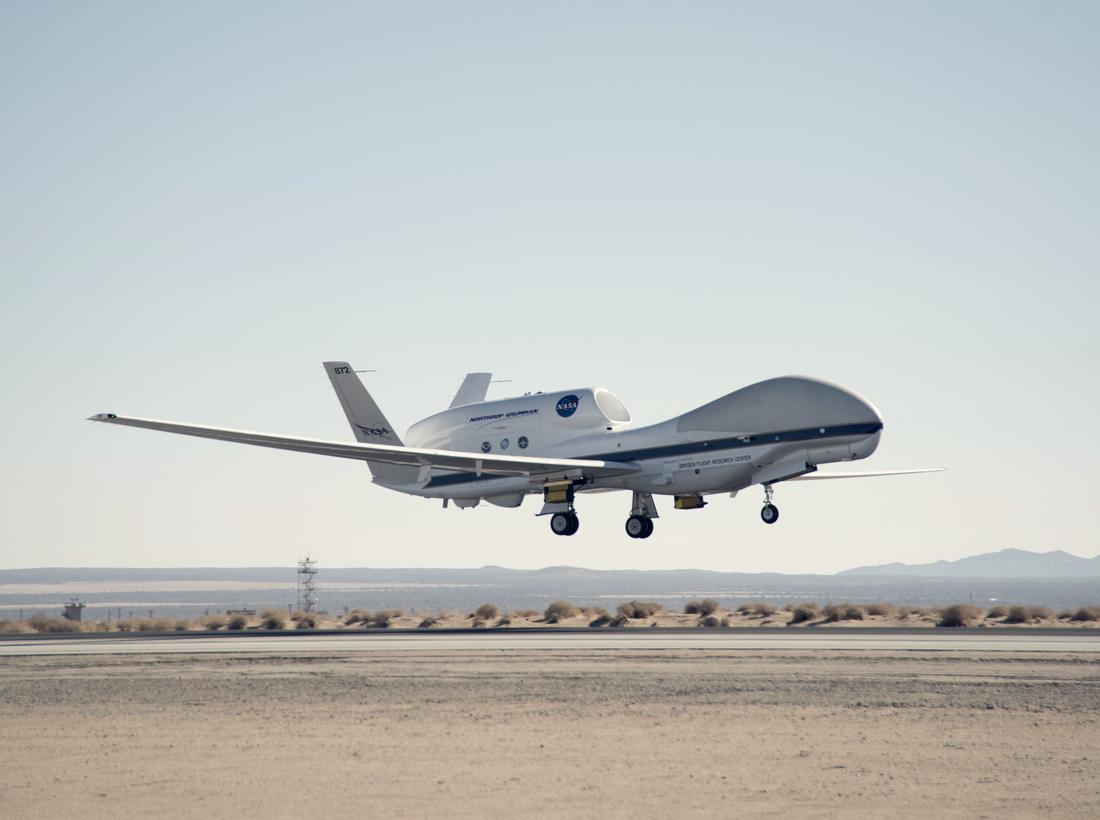
AIR
Persistent aerial sensing
Endurance flights produce continuous imagery and telemetry far faster than any downlink can carry it.
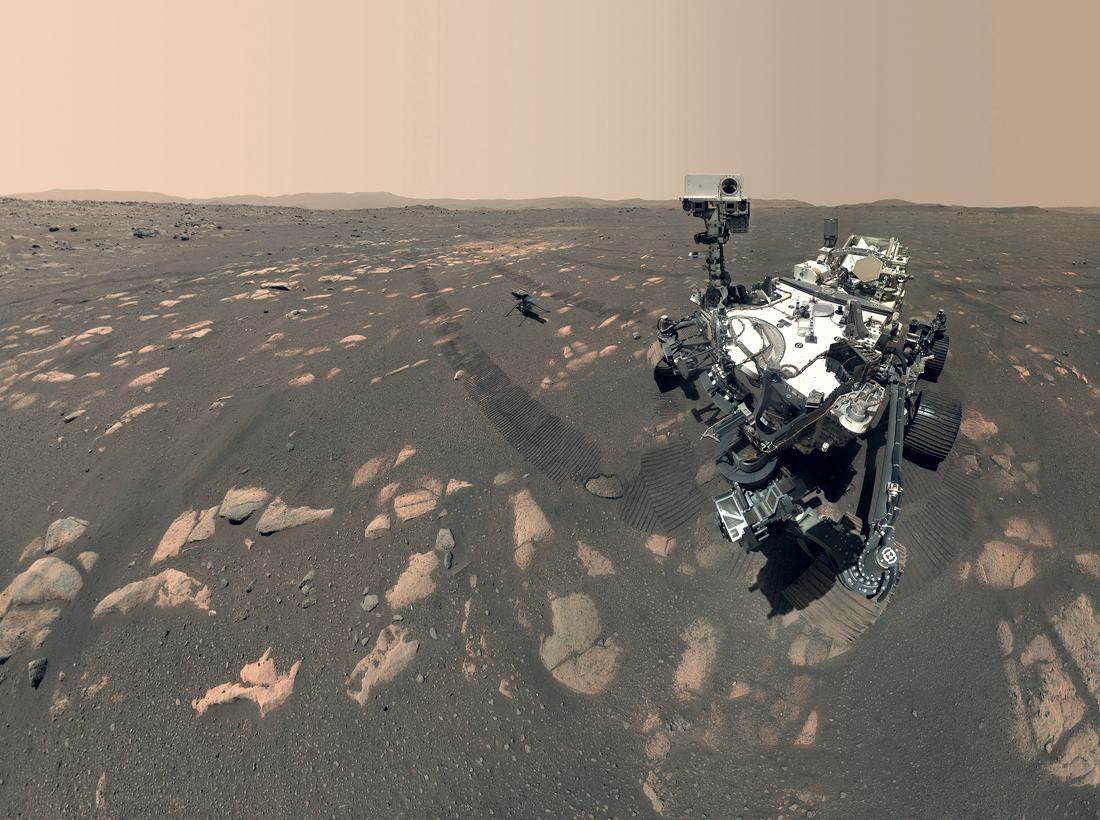 GROUND
Autonomy under delay
Perseverance drives and samples across Mars with minutes of light-lag — the limit case for deciding alone.
 SURFACE
Crewless at sea for weeks
Surface vessels hold station and coordinate with air and subsea assets across contested spectrum.
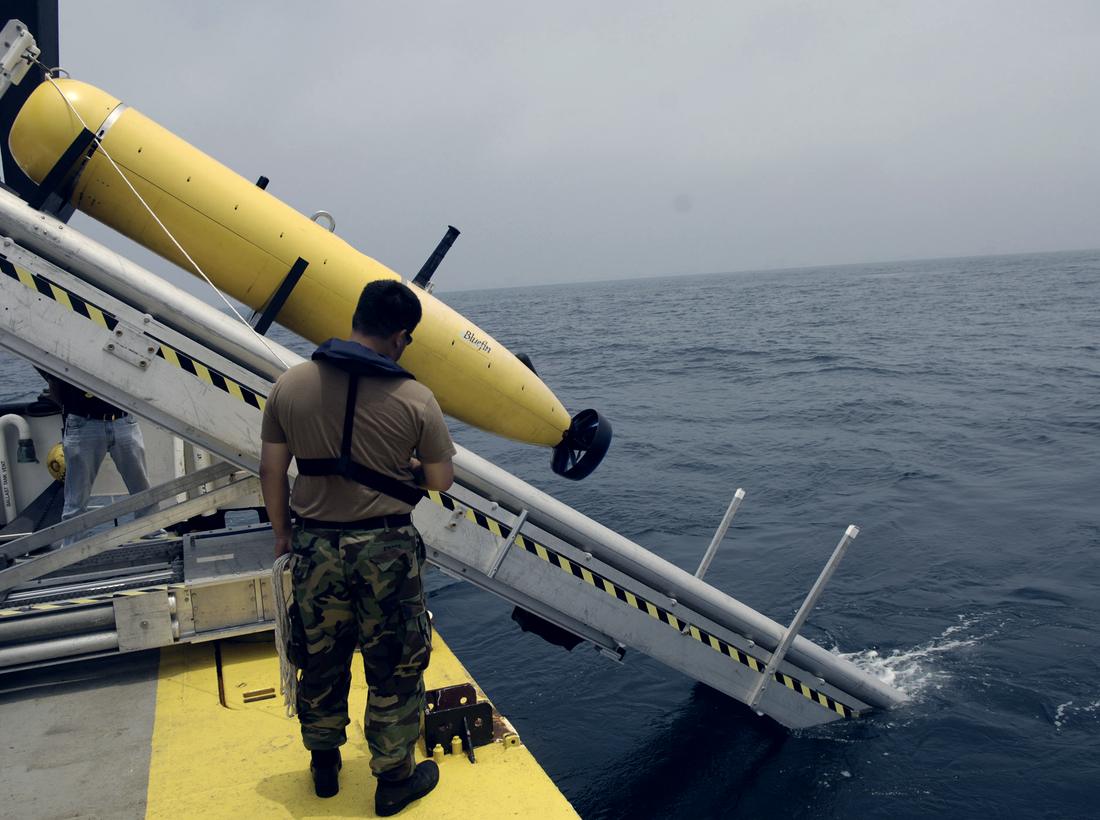 SUBSEA
Beyond radio contact
Undersea vehicles fall back to acoustic links measured in kilobits — and long stretches of silence.
Papers due
Oct 1, 2026Full workshop papers
Research topics
15Across four themes
Program committee
75 countries, 3 continents
Format
HybridIn person and remote
Unmanned systems have outgrown conventional analytics
Unmanned systems — aerial, ground, surface, and underwater — are now central to civil infrastructure, scientific exploration, disaster response, smart logistics, and defense.
The volume, velocity, and variety of data generated by modern UxV operations have grown beyond what traditional analytical methods can address. A single UxV swarm produces continuous streams of telemetry, sensor imagery, mission state, network topology, and adversarial-interaction data that must be processed, fused, and acted upon in near real time to preserve mission effectiveness in increasingly complex and contested environments.
This workshop brings together researchers from Big Data, machine learning, autonomous systems, network resilience, and cyber-physical security to share advances on how Big Data methods can enable robust, adaptive, and secure UxV operations at scale. We invite research presentations from both academia and industry, with the goal of creating a sustained community of research and practice around Big Data for unmanned systems.
Why UxV data is its own problem
Existing Big Data approaches were developed for centralized, well-connected systems. They do not transfer directly to the distributed, communication-denied, and resource-constrained reality of UxV operations. Three constraints define the gap.
01
Generated at the tactical edge
Data is produced far from any datacenter, under hard limits on energy, compute, and bandwidth.
02
Decisions made under uncertainty
Mission-critical calls must be made autonomously, in the moment, with partial and noisy information.
03
Operated in adversarial space
Sensors, communications, and control are actively targeted for degradation, spoofing, and denial.

A swarm's data does not wait for a connection. Whatever cannot be fused at the edge is simply lost. The workshop's central problem
Topics of interest
We welcome submissions across the following areas. The list is indicative, not exhaustive — work that sits between these themes is especially welcome.
Autonomy & learning
- Big Data analytics for UxV swarm coordination and autonomous decision-making
- Machine learning and deep reinforcement learning for adaptive UxV mission planning
- Federated and distributed learning for UxV swarms
- Manned-unmanned teaming (MUM-T) and human-machine interaction at scale
Networks & resilience
- Big Data approaches to self-healing UxV communication networks
- Energy-efficient data processing and routing for resource-constrained UxV platforms
- Big Data approaches to multi-domain UxV operations (air, land, sea, undersea)
- Big Data approaches to UxV traffic management and unmanned traffic systems (UTM)
Security & trust
- Anomaly and intrusion detection for UxV networks using Big Data
- Cybersecurity and resilience of UxV systems against electronic and cyber-physical attacks
- Privacy-preserving Big Data analytics for civil and commercial UxV applications
Sensing, reasoning & practice
- Sensor fusion and edge analytics for unmanned aerial, ground, surface, and underwater systems
- Knowledge graphs and semantic reasoning for UxV situational awareness
- Simulation, digital-twin, and Monte Carlo methods for UxV resilience evaluation
- Datasets, benchmarks, and reproducibility for UxV research
Themes are an editorial grouping of the fifteen topics in the workshop call; submissions are not required to name a theme.
Important dates
Oct 1, 2026
Due date for full workshop papers submission
DEADLINE
Nov 4, 2026
Notification of paper acceptance to authors
NOTIFICATION
Nov 25, 2026
Camera-ready of accepted papers
FINAL VERSION
Dec 14–17, 2026
Workshops — Phoenix, Arizona, USA
EVENT
Call for papers
Full workshop papers are due 1 October 2026. Papers are submitted through the IEEE Big Data 2026 CyberChair system and follow the conference's formatting and review requirements.
- Submission site
- IEEE Big Data 2026 CyberChair
- Paper format
- IEEE conference proceedings template
- Review
- Peer review by the workshop program committee
- Presentation
- Hybrid — authors may present in Phoenix or remotely
- Contact
- Workshop program chair — cbucu001@plattsburgh.edu
Who should submit
Researchers and practitioners in Big Data, machine learning, autonomous systems, network resilience, and cyber-physical security, from academia and industry alike. Dataset, benchmark, and reproducibility papers are explicitly in scope.
Organization
Program Chair
Cristian Bucur, PhD
Enterprise Architect, Montreal ·
Cristian Bucur holds a Master's degree in Information Security from Luleå University of Technology and a PhD from Polytechnique Montréal in cybersecurity and computer engineering, with research focused on resilience and self-healing in distributed unmanned systems. He has an extensive expertise in cybersecurity in roles including Cybersecurity Expert, Security Architect, and Enterprise Architect. He has served on the technical committee for several IEEE workshops and has published in the IEEE Workshop area.
He currently works as an Enterprise Architect in Montreal, Canada, He is also a member of the European Union Agency for Cybersecurity (ENISA) expert list.
Program committee — to be confirmed
Chamseddine Talhi, PhD
Professor, École de Technologie Supérieure
Canada
Omar Abdul Wahab, PhD
Assistant Professor, Polytechnique Montréal
Canada
Yoshimasa Masuda, PhD
Professor, Tokyo University of Science
Japan
Andrii Shalaginov, PhD
Professor, Kristiania University College
Norway
Luis Bautista, PhD
Associate Professor, Autonomous University of Aguascalientes
Mexico
Delbert Hart, DSc
Chair of Computer Science, SUNY Plattsburgh
USA
Stéphane Gagnon, PhD
Associate Professor, Université du Québec en Outaouais
Canada
Invited keynote speakers
To be confirmed. Candidate speakers will be drawn from senior researchers in autonomous systems, swarm intelligence, and resilient communications, including representatives from academia, federal research laboratories, and industry leaders in unmanned systems.
Phoenix, Arizona
The workshop runs 14–17 December 2026 as part of the IEEE Big Data 2026 workshop program in Phoenix, Arizona.
The workshop is hybrid: accepted authors may present in person in Phoenix or remotely, and sessions are open to remote attendees. Venue details, room assignments, and the session schedule follow the main conference program.
Registration and venue logistics are handled by IEEE Big Data 2026.